.svg)




.jpg)



On May 22nd, the International Day for Biological Diversity serves as a stark, empirical reminder of the fragile ecosystems that underpin global macroeconomic stability. According to comprehensive assessments by the World Economic Forum, biodiversity loss threatens approximately $44 trillion of economic value generation—representing more than half of the global Gross Domestic Product. While climate change and greenhouse gas emissions often dominate the narrative of corporate ESG reporting, nature loss and ecosystem degradation have rapidly ascended to the apex of enterprise risk matrices.
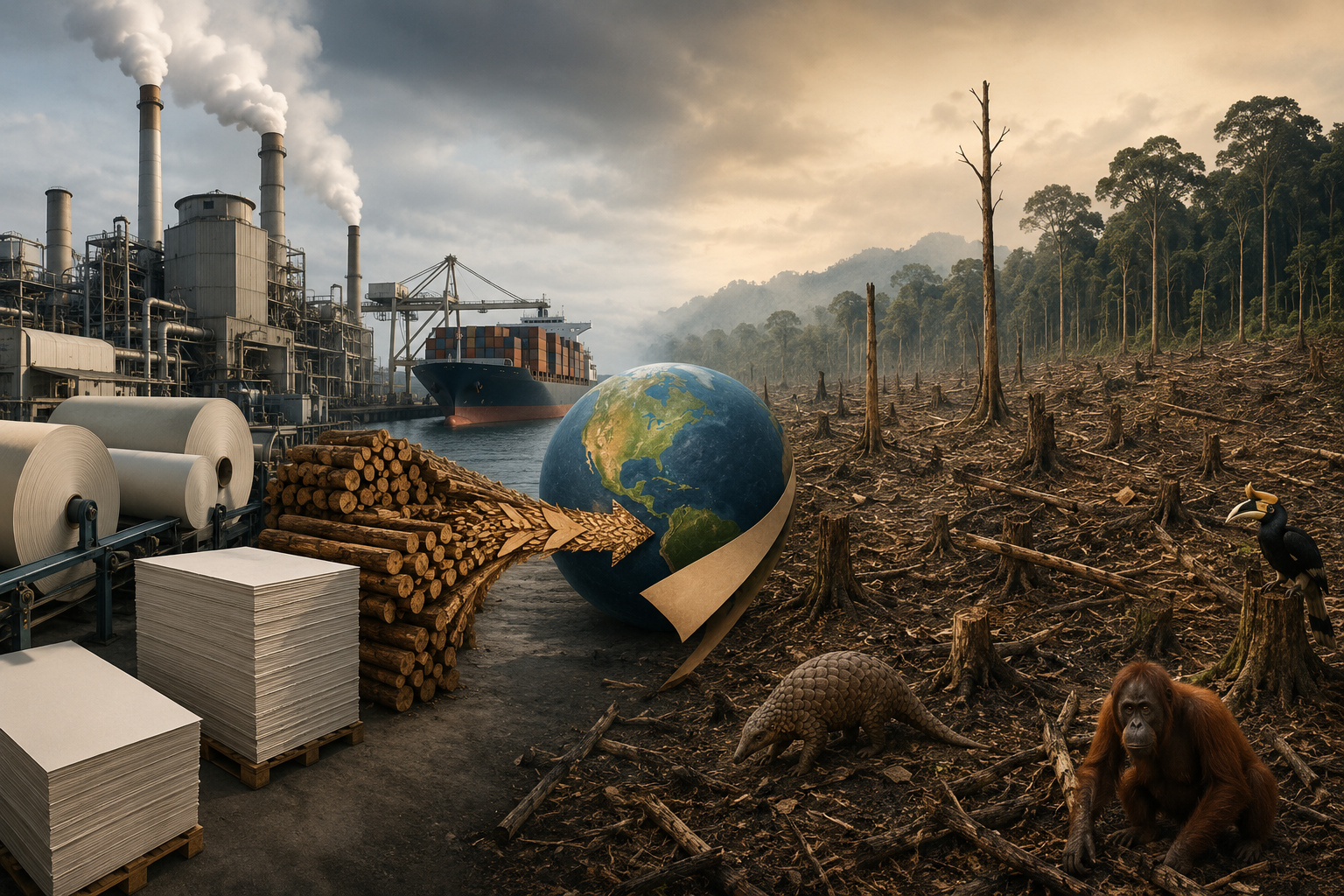
The commercial pulp and paper industry plays a disproportionately large role in this ecological crisis. Accounting for between 33% and 40% of all industrial wood traded globally, traditional paper manufacturing exerts immense, continuous pressure on both managed timberlands and irreplaceable natural forests. Sophisticated economic modeling demonstrates that high-income nations frequently offshore their environmental footprints, driving consumption-based deforestation that is directly responsible for up to 13.3% of global species range loss.
As the regulatory landscape tightens—highlighted by the enforcement of the EU Green Claims Directive, which demands highly verifiable environmental data and strictly prohibits vague assertions of "sustainable forestry"—companies must adapt their supply chains. True operational resilience requires a structural, quantifiable decoupling of packaging materials from vulnerable forest ecosystems.
Agricultural residues provide the most scientifically robust and scalable pathway to achieving this decoupling. Every harvest season, crops such as wheat, rice, and sugarcane generate millions of tonnes of fibrous byproducts. Sugarcane bagasse, the residual fibrous material remaining after juice extraction, contains high concentrations of cellulose, making it an exceptionally viable candidate for high-quality papermaking.
The measurable biodiversity metrics associated with this material transition are profound. Rigorous Life Cycle Assessments indicate that utilizing sugarcane bagasse in place of virgin wood pulp yields remarkable land-use savings. Producing one ton of bagasse paper can save an estimated 0.13 to 0.16 hectares of tropical forest from clear-cutting or degradation. When scaled across the massive procurement volumes of multinational corporations, this translates to thousands of hectares of natural habitat preserved annually, directly mitigating the destruction of complex ecosystems and protecting critically endangered flora and fauna.
Furthermore, integrating agricultural waste into commercial supply chains actively prevents the prevalent practice of open-field burning. By upcycling these abundant residues, industries eliminate the localized environmental damage caused by smoke and particulate matter, which severely degrades soil microbiomes and suffocates surrounding habitats.
Protecting biodiversity requires vastly more than theoretical tree-planting initiatives; it requires the active preservation of existing, complex forests. By transitioning to tree-free, agricultural waste packaging, businesses can dramatically compress their land-use footprint, safeguard global biodiversity, and insulate their supply chains against the escalating financial risks of nature loss.
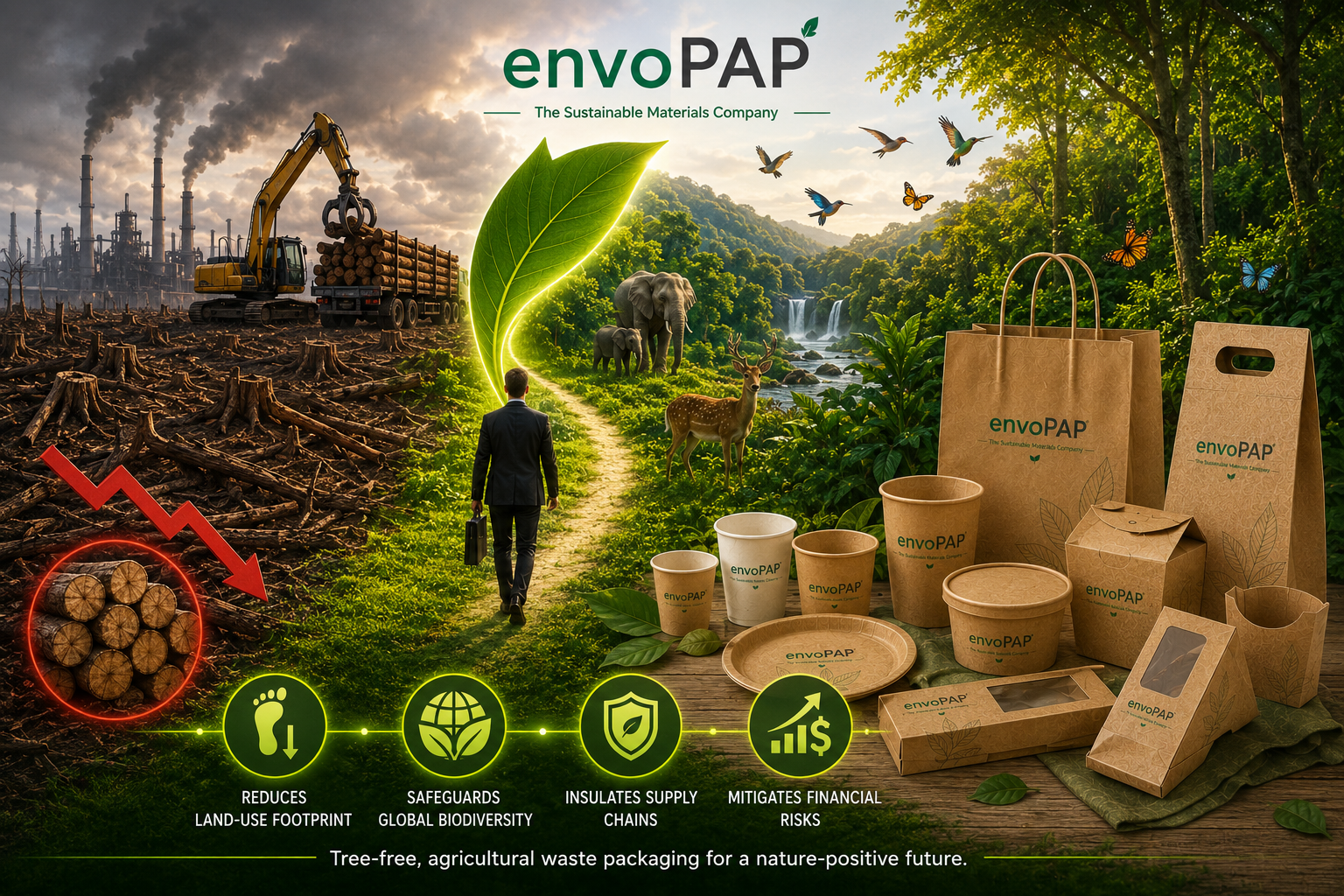
Image credits:
Photo by yang wewe on Unsplash
Photo by Thomas Oxford on Unsplash